Una de las formas más sencillas de decorar un dormitorio sin mucho esfuerzo, pero con un resultado extraordinario, es con algún tipo de revestimiento de pared.
Con los revestimientos de pared, sean del tipo que sean, puedes conseguir decoraciones únicas y maravillosas que aportan un toque diferente a tu dormitorio. Además, sin mucho esfuerzo, y sin ocupar ese espacio que muchas veces es tan necesario.
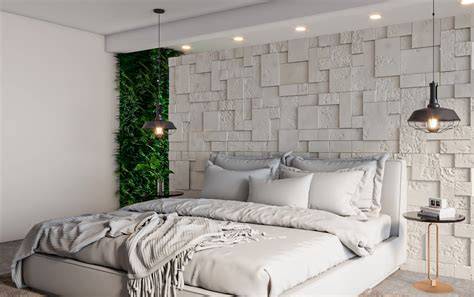
Consiguiendo crear puntos focales, separar espacios o remarcar la zona de la cama sin necesidad de contar con un cabecero.
Ideas para revestir paredes interiores
Puedes revestir la pared del dormitorio de muchas maneras. Puedes optar también por un papel pintado que aporte textura o color a la estancia. La elección de un material u otro dependerá del estilo que le quieras dar a la decoración.
Los revestimientos, además de atraer todas las miradas hacia la pared en la que se encuentran, son un gran aislante. No solo del calor y el frío del exterior, sino también de los ruidos de los vecinos. Algo fundamental si quieres descansar como te mereces.
Si solo eliges una de las paredes para incorporar algún tipo de revestimiento, conseguirás atraer todas las miradas hacia allí.
Puedes conseguir que tu dormitorio se convierta en un loft neoyorkino, revistiendo la pared del cabecero de ladrillos. También puedes conseguir un aire más rústico incorporando piedra natural a la pared.
Si hablamos de textura, también es fácil conseguirla con unas baldosas de relieve. No creas que solo son para el baño o la cocina. Reviste la pared principal de tu dormitorio con baldosas de formas geométricas y conseguirás atraer hacia allí todas las miradas. Las formas bolt son tendencia esta temporada, así que imagínate una pared repleta de círculos.
Otra forma muy original de utilizar el revestimiento es hacerlo servir de cabecero de la cama. Tan solo debes añadir el revestimiento, ya sea de madera, de papel pintado, de molduras o textil, en la zona de la pared en la que se encuentra la cama. Si son listones de madera, haz que lleguen hasta el techo. Si son molduras, enmarca la cama con ellas.
También puedes conseguir que la cama quede enmarcada por la ausencia de revestimiento, precisamente en esa zona de la pared. Incorpora, por ejemplo, listones de madera a ambos lados de la cama, para delimitar la zona de las mesillas de noche, y deja libre la zona del cabecero. No lo necesitas. Puedes hacer lo mismo con piedra natural o con papel pintado. Deja volar tu imaginación y usa el revestimiento como te plazca.
El revestimiento más sencillo de colocar es el papel pintado. Así que no tengas miedo de utilizarlo. Con él puedes conseguir delimitar espacios diferentes que se encuentran dentro del dormitorio.
El revestimiento de madera es uno de los más versátiles y, de una forma u otra, siempre ha estado de moda. Quizás ahora se opta más por los listones de madera. Son otra buena solución para delimitar zonas, al tiempo que les aporta un plus de calidez. Por ejemplo, si en tu dormitorio también tienes un escritorio, puedes resaltarlo incorporando listones únicamente en esa zona, diferenciándolo del resto de la estancia.
Si en tu dormitorio cuentas con muchas puertas, porque tienes la suerte de tener un baño en suite y un vestidor, puedes esconder alguna de ellas prolongando el revestimiento por la propia puerta. De manera que quede escondida. Una pared de listones de madera puede quedar genial, por ejemplo.
Revestimiento de Pared con placas simil ladrillo
5 ideas para renovar tus paredes
Novedades para renovar el estilo de las paredes de tu casa. En BigMat tenemos opciones que te ayudarán a elegir la mejor opción, en función de tu gusto y tus necesidades.
Los revestimientos que son tradicionales no van a pasar de moda, como la madera y la piedra entre otros, pero actualmente hay novedosas opciones para decorar y revestir las paredes.
Podrás incorporar numerosas soluciones para decorar tus paredes, incorporando texturas, colores y personalidad tus paredes
| Idea | Material o estilo | Uso destacado |
|---|---|---|
| 1 | Estilo Pétreo | agregar mucha textura y color |
| 2 | Estilo Madera | durabilidad y elegancia |
| 3 | Gresite | movimiento y luminosidad |
| 4 | Mezcla de texturas | una única pared se viste de ladrillo |
| 5 | Porcelánico | elevadísima resistencia |
1. Estilo Pétreo El Revestimiento estilo pétreo son idóneos para agregar mucha textura y color a las paredes de tu casa. Reviste una única pared para que sea el punto de atracción de un espacio, como en este salón, en donde en el impresionante muro de piedra, decora el espacio y esperamos que te inspiren.
2. Estilo Madera Uno de los materiales preferidos para revestir tanto paredes, como suelo y techo es la madera. En el caso de los pavimentos y revestimientos, es una opción que garantiza durabilidad. Es un material que queda elegante y que se adecúa a todas las decoraciones. La opción del revestimiento estilo madera está disponible en tiene muchas tonalidades, la elección depende sólo de tu gusto.
3. Gresite El gresite es similar a un pequeñísimo azulejo de cristal, que da un aspecto de movimiento y luminosidad maravilloso. Por su estética, suele encajar en zonas como la cocina o el baño, además de por su fácil limpieza.
4. Mezcla de texturas Cuando no quieras perder totalmente la textura natural de un muro de piedra, puedes inspirarte en esta solución. Una única pared se viste de ladrillo y que modifica la estética del conjunto.
5. Porcelánico Entre las características más notables porcelánico encontramos su elevadísima resistencia. Pavimentos y revestimientos de alta calidad. Anti-hielo, con opción de anti-deslizante y gran resistencia ante las agresiones químicas. El material más utilizado en las obras y reformas por sus altas prestaciones y su asequible precio.
Revestimientos de interior para transformar espacios
Elegir el revestimiento de interior perfecto puede transformar por completo el diseño de tu hogar. No solo se trata de estética, sino también de funcionalidad. Con la selección adecuada, puedes mejorar la acústica, proteger las paredes y darle un toque único a cada espacio.
1. Revestimientos de Madera El revestimiento de interior de madera es una opción atemporal que aporta calidez y elegancia a cualquier espacio. Con Absorción Acústica: Perfecto para espacios donde se necesita mejorar la acústica, como un home office, sala de TV o dormitorio. Sin Absorción Acústica: Si lo que buscas es un detalle estético sin modificar la acústica, el revestimiento de interior liso es la opción ideal.
2. Revestimientos de PVC Los revestimientos de PVC son conocidos por su durabilidad y fácil mantenimiento, lo que los convierte en una excelente opción para cualquier revestimiento de interior. Revestimientos UV: Resistentes a la humedad y fáciles de instalar, son ideales para cualquier espacio interior, incluidos aquellos con alta humedad, como baños. Revestimientos Tipo Palillaje: Ideales para quienes desean añadir textura y estilo al diseño de su hogar. Revestimientos Sencillos de PVC: Versátiles y fáciles de combinar, estos revestimientos son ideales para cualquier espacio.
3. Revestimientos PET Los revestimientos PET son una opción ecológica y moderna para el revestimiento de interior.
1. Mejora de la Acústica Para espacios donde la calidad sonora es crucial, como estudios de música o salas de cine en casa, el revestimiento de interior con absorción acústica es indispensable.
2. Protección y Durabilidad En áreas con alto tráfico o exposición a la humedad, como cocinas y baños, el revestimiento de interior de PVC, especialmente los UV, son la opción más recomendable.
3. Diseño y Estética Si el objetivo es realzar el diseño de un espacio, el revestimiento de interior de madera o los revestimientos tipo palillaje de PVC son ideales.
El revestimiento de interior es una herramienta poderosa para transformar tu hogar. Con la elección correcta, puedes mejorar la acústica, proteger tus paredes y elevar el diseño de cualquier espacio.
Ideas para revestir fachadas con personalidad
Decidir cómo será la «tarjeta de presentación» de nuestro hogar es una tarea que no se debe tomar a la ligera. Ya que causar una primera buena impresión es clave, sobre todo, si queremos lucir una fachada de casa moderna.
1. Las fachadas deben ofrecer resistencia frente a las condiciones propias del ambiente exterior.
2. En cuanto a la estética, debes considerar los tipos y estilos de materiales que sean acordes para acompañar el diseño fachadas de casas modernas.
1. Pocos acabados gritan estilo moderno tanto como el cemento y el hormigón. En Duomo encuentras diferentes opciones de revestimientos tipo cemento que puedes usar en tu proyecto de remodelación, como el porcelanato o gres porcelánico.
2. Recuerda que las fachadas de casas modernas incorporan una combinación de texturas.
3. Si quieres una fachada de casa con piedra sin necesidad de preocuparte por su mantenimiento, los revestimientos tipo piedra son perfectos para ti.
4. Una combinación en tendencia es combinar ladrillo con tonos grises o negros.
5. Puedes usar revestimientos tipo madera en sus tonalidades más claras y combinarlos con revestimientos tipo cemento para generar un gran contraste. Por su resistencia, durabilidad y adaptabilidad al ambiente, los revestimientos tipo madera más utilizados son los porcelanatos tipo madera y las cerámicas.
Como consejo final, te recomendamos no combinar más de 2 texturas ni más de 3 colores. Entonces, ¿ya tienes en mente el diseño de fachada para tu próximo proyecto? ¡Es hora de hacerlo realidad!
Tipos de revestimiento de pared que inspiran
Walls are blank canvases awaiting your creative genius. Adding personality and character to a room by way of wall treatments isn’t all that difficult.
If you’re a homeowner looking to move beyond the obvious gloss, semi-gloss, or matte paint finishes, then decorative wall coverings could be right up your alley.
Adding intricate detail and texture to the walls in your home is a fun weekend project that the whole family can enjoy.
Wall treatments can be anything from an eye-catching feature in the living room, to an accent wall or even a DIY headboard in your bedroom. If you're ready to take on this project, but unsure where to start, we’ve got some ideas lined up for you!
What Are the Different Types of Interior Wall Coverings? 10 Unique Ideas
1) Trims
Homeowners often experiment with trims on the walls of their homes, applying pieces in narrow strips to suggest panels. This style of treatment is known as picture framing and the size of frames will vary depending on the desired effect for the homeowner. Trims can also be used to emphasize features of the room, such as framing around a fireplace or entertainment system.
Furthermore, framing can stand on its own in an intricate design to emphasize the minimalism of a wall or room. The key to making this design eye-catching is ensuring that the trim is uniform and symmetrical, otherwise, homeowners could risk throwing the balance of a room completely off.
2) Wainscoting
Wainscoting is a common wall covering that adds an impressive statement to any space. Traditional wainscoting consists of layered wood panels which generally extend up only half the wall, and is often finished with moulding. It is usually white and made of beadboard. However, wainscoting doesn’t have to remain a flat white, and can instead be painted to suit the tastes of the homeowner.
A bonus of wainscoting is that it is generally inexpensive while also being readily available. It generally comes in two main forms, and these are tongue and groove plywood and MDF panels, the latter of which are usually primed for painting. Wainscoting also comes in tile form, but this is generally reserved for bathrooms as it creates a water sealed seam.
3) Designer Wall Lighting
Les luminaires muraux design offrent une esthétique intéressante et peuvent être intégrés de manière artistique pour habiller un mur entier, éclairer un plafond ou créer un détail unique à l'intérieur de vos espaces. Ici, les luminaires muraux créent des lignes asymétriques qui dynamisent le mur du salon. Ces traits non symétriques apportent une dimension artistique et contemporaine à l'espace, ajoutant une touche de modernité et de créativité à ce salon.
4) Wood Paneling
Wood panelling is an exceptionally versatile type of wall covering, as it can be used to cover a full wall or half of a wall as well as being painted, stained or left bare to suit the tastes of the homeowner.
This choice might seem outdated, but there are many ways to modernize this look and give it a sophisticated update. Try using it placed horizontally in a dark colour rather than the traditional mid-range wood colouring. A darker colour or stain will work to add depth while breathing fresh life into a space.
5) The Industrial-Style Wall
The concrete wall gives this living room a fantastic style, with an industrial vibe that really stands out and a modern touch. The raw aspect of the concrete adds a rugged and authentic feel, while still maintaining a contemporary vibe. You can enhance this with industrial-style hanging lights from the ceiling. These fixtures highlight the industrial aesthetic of the room and create a warm atmosphere.
6) Exposed Brick
Exposed brick is a sought-after design statement, mimicking those expensive Brooklyn-style lofts. Some homeowners attempt to recreate this rustic look using wallpaper and faux materials, and this is an easy DIY project if you're interested in doing so. However, if you’ve got access to the real thing, be sure to preserve it, as exposed brick is a beautiful contrast to white walls or modern décor, and looks elegant in almost any room of the home.
Be aware that you can also hang things on your brick wall. To find out how, read our article Exposed brick walls and how to hang things on them.
7) Wall Stickers
Stickers can be used to decorate a single accent wall, a non-committal way to express personal style without taking on a full-blown renovation project. Homeowners can adopt a timeless floral theme, a geometric pattern, or even blow up a family photo that can be adhered to the wall. Recreate the skyline of your favourite city and stick it up above your living room couch.
One of the best things about using stickers as a wall covering is that they can be combined with existing elements of your home to create a harmonious, but fun, decor.
8) Wood Pallets
Upcycling palettes can add rustic texture to an accent wall or be used as a free-standing focal point. Although this job will be a little bit tougher than simply sticking the panels to your existing wall, it’s not impossible! Palettes will have to adhere to plywood panels before and will then be ready to be screwed into the wall.
Stain or paint the palettes before you adhere them to the plywood, matching or contrasting the decor of your home. Since the palettes themselves are inexpensive, make sure to experiment with assorted colours and shades of paint. Or keep things rustic and simple sand-down palettes for a rustic vibe.
9) Stone and Wood Wall Covering
If you're looking for a distinctive way to bring a rustic yet modern touch to your living room, consider a wall covering that combines stone and wood. Imagine a wall of raw, authentic stone paired with a wooden wall that offers warmth and contemporary style. This combination creates a truly unique aesthetic, captivating in its originality.
10) Decorative Wallpaper
Although the options are endless, wallpaper is a classic and timeless wall covering that adds a personal touch of style to any room. Wallpaper can be used on a single wall to create an accent or to cover an entire room.
If you choose to apply it to just one wall, use a bold pattern that might be too overwhelming for an entire room. If you want to cover all the walls in a room with this material, make sure to choose something you won’t tire of quickly, as applying and removing it isn’t the simplest of processes!
Preguntas útiles sobre revestimientos
FAQHow to cover damaged walls?If you're planning to use a wall covering on a damaged wall, it's essential to repair the underlying damage first, regardless of the type of covering. For instance, cracks in drywall should be patched and smoothed, while water-damaged areas may require replacing sections of the wall to prevent future issues.
What is the best material to cover a living room wall?To cover your living room walls, there are plenty of creative options to consider. Trims and wainscoting can add a touch of classic elegance, while mouldings offer intricate detail for a refined finish. If you're seeking a bolder look, metal tiles or stone cladding can create an eye-catching accent wall. Wood paneling, wood pallets, and exposed brick provide warmth and texture for a cozy atmosphere. For a quick and budget-friendly update, wallpaper or decorative stickers offer versatility and endless design possibilities.
What material is often used for wall covering?While there are many different types of wall coverings you'll find in homes, wallpaper stands out for not only its popularity, but its versatility and aesthetic appeal as well. Available in a vast array of colours, patterns, and textures, wallpaper can transform a space and reflect personal style. Whether you opt for a bold print to make a statement or a subtle texture for understated elegance, wallpaper can enhance any room.
What is the cheapest wall covering material?From our list, you won't find anything more affordable and easy to install than stickers. They're a versatile option that allows for quick customization, with minimal effort and cost, making them ideal for those looking to refresh a space without a major commitment.
Ideas de revestimientos con paneles de madera
Elizabeth Metcalfe collects her favourite wall panelling ideas, from traditional wooden panels to cabin-style cladding, as well as quirkier options featuring trompe l'oeil, bright colours, and interesting patterns
Wall panelling ideas: tongue and groove panelling is a popular choice for creating a ‘downstairs’ feel to spaces, as well as lending a rustic aesthetic.
Wooden wall panelling is an excellent way to add personality to a room.
The origins of panelling are - as is often the case with many historical features of our interiors - functional. As early as the 13th century, wooden panels were used to add insulation to a room, but quickly became a decorative feature in their own right.
Panelling can be used to add Georgian-style grandeur to a room, lend a feeling of cosy cabin chic, or simply add some character and intrigue to an otherwise blank wall.
Some of the most ingenious examples of wall panelling include a concealed cupboard or wardrobe, cleverly hidden behind decorative panels.
It doesn't have to cost the earth, and depending what style you want, you can even do it yourself at home.
There are plenty of tutorial videos out there, and hardware shops such as B&Q sell an array of panelling kits, while cutmy.co.uk and the aptly named diywallpanelling.co.uk offer bespoke sizes in a range of styles.
For a traditional look, The English Panelling Company sells British-made panelling organised by period (Jacobean, Georgian, Regency, Edwardian etc).
If you're struggling to decide what kind of panelling you want in your house, we've rounded up some of the most inspirational examples from the House & Garden archive.
Paul Whitbread‘It just felt a little too plain,' says interior designer Charlotte Boundy of the drawing room of this Victorian house in Oxford. To add visual interest, she added panelling in a square Jacobean style and painted it in Edward Bulmer's ‘Milk White’.
Tom GriffithsDean Hearne The knitwear designer Anna Phillips of Hambro & Miller has installed tongue and groove panelling on the walls and ceiling of her Sussex cottage. Painted in Atelier Ellis's ‘Double Bone, Shell & Quill’ and ‘Bitter Chocolate', the cladding adds character to the modern extension.
Christopher HorwoodSimple panel mouldings can be an elegant way to add visual interest and a sense of period detail to a room. In the drawing room of this house by Stella Weatherall, the pale pink walls have a beaded detail that helps to frame the art and break up the large expanses of flat surface.
Designer Adam Bray applied a blue-green gloss paint to the panelling in the narrow dressing room of this London flat. ‘I love gloss walls - they bounce the light round the room,’ says Adam. ‘It is really important that you get the proportions right with panelling. I looked at Edwardian references for these.’
Wainscoting, or half-height panelling, is commonly used in bathrooms to provide a splash-proof surface, and can make a pleasing contrast with wallpaper above. Salvesen Graham used this combination in this country house in Hampshire, with 'Knurl Paper' from Howe at 36 Bourne Street and a biscuity paint colour on the panelling.
Paul MasseyA slightly more formal style of panelling defines the spaces for hanging coats in the lobby of designer Caroline Riddell's 16th-century Suffolk longhouse. The panelling is painted in blood red gloss paint: ‘So much more practical with dogs and gardening equipment to clean,’ as Caroline says.
Dean HearneIn the antique dealer Dana Jennings' New England house, panelling in Benjamin Moore hue called ‘Jamesboro Gold’ provides a backdrop for a still life inspired by the 17th-century Spanish painter Francisco de Zurbarán and Italian paintings of the Madonna and child tease the gold tones out of the room.
Tom GriffithsIn travel editor Melinda Stevens' richly colourful London house, gloss blue panelling conceals wardrobes in the main bedroom. ‘Our turquoise panelled bedroom was meticulously designed by my friend Tom Bartlett at Waldo Works. The drawings that line it are by Edward Le Bas, my husband’s great uncle, who was part of the Bloomsbury crew. They are his costume designs for a production of The Duchess of Malfi, given to me by my mother-in-law’, she says.
Alicia TaylorPaul MasseyIn the Wiltshire home of Sarah and Renshaw Hiscox, panelling in Little Greene’s ‘Normandy Grey’ sets off a painting by Endellion Lycett Green.
The Ingalls‘I used wood panelling throughout the space to add a subtle and effortless texture, creating visual interest with the sleek geometric lines of the wood while introducing an element of contrast with rustic soft furnishings,’ says Kelly Wearstler of this house in Malibu.
Helen CathcartFor this cottage by the sea, the interior designer Isabella Worsley built a banquette in the dining area, upholstered in Lee Jofa's ‘Gridlock’ in Indigo. A pendant light from Pinch hangs overhead. The curtains were made up in Zoffany's ‘Jayshree’ pattern. The tongue & groove panelling speaks to the house's coastal location.
Martin MorrellMichael Sinclair In Martin Brudnizki’s Oxfordshire home, panelling is painted in Edward Bulmer’s ‘Naples Yellow’, and helps to create the ‘arcadian fantasy’ that he had planned for the room. He also knew he wanted it to be yellow - ‘like sunshine even on a dark winter’s day’. As daylight fades, it takes on a golden hue and the room simply glows, thanks in no small part to the dimmed lights and candles - there are no fewer than 20 of the former and 20 of the latter.
Paul MasseyPaul MasseySimon BevanIn this bedroom, designer Ben Pentreath has clad the walls, ceiling and window casement with painted tongue-and-groove panelling. It is a fairly traditional way to use panelling, especially in an attic bedroom, but the different angles give it an almost modern and geometric quality.
Rachel WhitingRather than using parquet for the floor, designer Maria Speake of Retrouvius decided to clad a sliding door with it in this Barbican flat. It gives the door an almost sculptural quality and the polished wooden blocks each refract the light slightly differently.
Paul MasseyOn the edge of a Gloucestershire meadow sits a tiny barn filled with varied treasures collected by the antique dealer and designer Christopher Howe, providing its owners with an idyllic country bolt-hole.
The interior is a mishmash of furniture from across the centuries, timber-clad walls, oak floors and hefty stone slabs in the kitchen. In the kitchen, antique church pews mark out the tiny dining area, while Plain English cabinets contribute to the distinctly cottagey feel and an eighteenth-century Norwegian dresser fits so perfectly it might have been made for the space.
‘I wanted to differentiate between panelling on the ceiling and the walls, so we used reclaimed random-width boards on the walls,’ explains architect Gil Schafer, who masterminded this sitting area with designer Rita Konig. For the ceiling, he opted for uniform, thin boards that are less distracting.
The architect Graham Bizley and his interior-designer wife Emily clad their bedroom walls with 1.2-metre-wide plywood sheets. ‘Timber panelling needs to be treated for fire protection witha special sealant or paint before applying the top coats of paint,’ says Graham.
‘I was inspired by panelling that I had seen on my travels to historic houses in England and France,’ says Steven Gambrel of the design that he created for this American hallway. The pale painted central border ties in well with the flooring. The slightly weathered finish was achieved by lightly sanding layers of paint to create subtle colour variations. The surface was then waxed to seal and protect the paint.
Consider the age of your building if you are creating panelling from scratch. For this Victorian house, Max Rollitt added Jacobean-style panelling, a design that experienced a revival in the nineteenth century. It is painted in a soft grey, which was mixed to achieve a chalky finish that resembles early lead paint.
The oak panelling in this snug designed by Rabih Hage creates a cosseting feeling. ‘The unstained panelling is original to this Queen Anne house and has darkened over the years,’ says Rabih. The cream-painted shutters prevent the wood from overwhelming the space.
The clean-lined panelling in this study by Hugh Henry of MHZ design studio gives the otherwise traditional room a modern feel, and the grey shade stops the dark-brown pieces of antique furniture feeling too grand. It is a good way of concealing built-in storage, and here it has been combined with low-level drawers.
Jason IngramFor a contemporary and affordable take on panelling, consider birch plywood. It has been used here to line the walls of this house, which belongs to Adam Sykes, the owner of fabric house Claremont. ‘We used cheap builder’s ply, oiled it and finished it properly,’ says Adam.
Simon BrownDesigner Vanessa Macdonald lined the walls of this sitting room at her country house with painted boards. ‘The space lacked charm and had no original features,’ says Vanessa. ‘I’d seen vertical panelling in country houses.’ This horizontal arrangement tricks the eye into thinking the room is wider than it is.
Simon BrownMixed-width, vertically staggered elm boards line the walls in this relaxed sitting room in Robyn Muir's house, designed by Caroline Holdaway. Each board was coloured with ochre and umber stains to achieve an overall even colour and then the boards were waxed to give them a lustre.
Lucas AllenThe neat attic bedroom of designer Hugh Leslie's Chelsea studio is partially clad in horizontal tongue-and-groove boarding. This is a good trick to visually widen a small room. Try the Georgian range from The English Panelling Company, which would create a similar effect.
Paul MasseyBrushed pine (laid horizontally as is traditional, but 'brushed' for a textural, more modern look) and slate set the tone in the bathroom of interior designer Tino Zervudachi's Gstaad chalet that's designed for deep comfort and relaxed partying. The bathroom can be accessed from the hall through a neatly designed cloakroom, as well as from the bedroom, and is the essence of chic - the beautiful curve of the wood-clad, free-standing bath set off by the straight lines of the room and the black slate floor and surfaces. 'I wanted to be able to lie in my bath and look out at the landscape,' Tino says. The first time he had a bath here, he spotted a deer running across the mountainside.